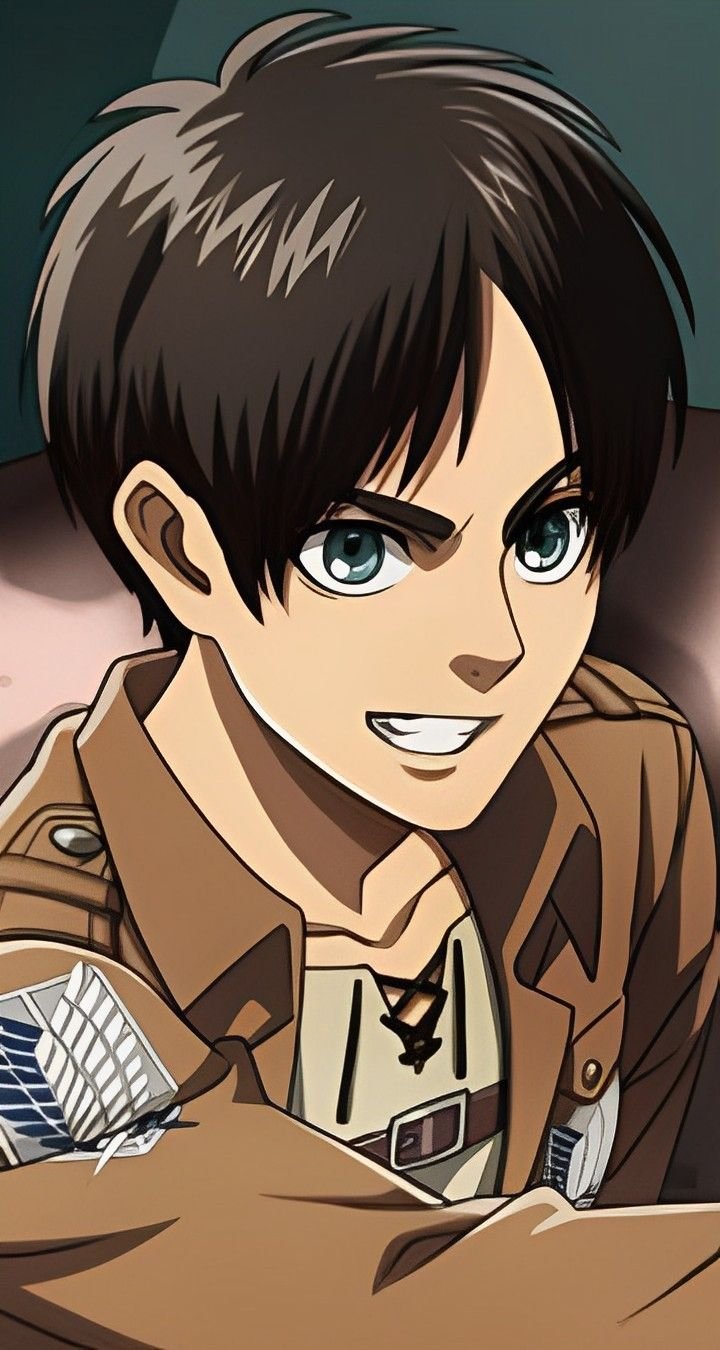
In the vibrant world of manga and anime, certain narratives don't just entertain; they provoke thought, spark heated debates, and challenge our perceptions of heroism, morality, and even storytelling itself. Eren Yeager's polarizing journey in Attack on Titan stands as a monumental example, transforming a beloved protagonist into a figure of intense controversy. But what happens when a burgeoning hit like Dandadan ventures into similarly complex, sometimes uncomfortable, thematic territory?
This hub dives deep into the intriguing parallels between these two titans of storytelling, examining how Dandadan, with its unique blend of sci-fi, horror, and humor, mirrors the very essence of controversy and thematic depth that defined Eren's saga. Get ready to explore how both series push boundaries, tackle sensitive subjects, and leave an indelible mark on their audiences.
Dandadan: A Genre-Bending Phenomenon with a Dark Edge
Since its debut in Shonen Jump in 2021 and its much-anticipated anime adaptation in 2024, Dandadan has captivated readers and viewers alike with its audacious premise. It plunges us into the lives of Momo Ayase, a staunch believer in ghosts, and Okarun (Ken Takakura), who’s convinced of alien existence. A whimsical bet to prove their beliefs quickly spirals into a chaotic reality where both ghosts and aliens are undeniably real, and incredibly dangerous. Okarun is possessed by the mischievous Turbo Granny, losing his "kintama" in the process, while Momo finds herself targeted by aliens seeking to exploit her for reproduction. Together, they form an unlikely duo, battling bizarre entities and navigating a world far stranger than they ever imagined, all while developing an undeniable connection.
The series is lauded for its kinetic action, unforgettable characters, and genuinely laugh-out-loud moments, yet it doesn't shy away from darker themes and sequences that challenge its audience.
The Weight of a Protagonist: Deconstructing Eren Yeager's Arc
Eren Yeager's narrative evolution in Attack on Titan remains one of the most talked-about character arcs in recent memory. He began as a symbol of hope and vengeance, driven by a simple desire for freedom and retribution against the Titans. However, as the story progressed, Eren's path twisted into something far more morally ambiguous, culminating in actions that divided the fandom and reshaped the very definition of a "hero." His decisions ignited intense debate, forcing audiences to grapple with complex questions of justice, freedom, and the cost of survival. For a thorough examination of his motivations and the global discussion he sparked, you'll want to explore .
Dandadan's Own Controversies: When Storytelling Pushes Boundaries
Much like Attack on Titan, Dandadan isn't afraid to push buttons, resulting in its own set of fan discussions and controversies. The end of the anime's first season, concluding on a significant cliffhanger from the Cursed House Arc (manga chapter 33), left many viewers reeling. This scene depicts Momo Ayase in a vulnerable situation at a hot spring, threatened by the sinister Kito family. The abrupt cut-off point, without immediate resolution, fueled widespread debate among fans, sparking frustration and criticism over the decision to end the season there. If you're curious about the specific points of contention and their impact, .
This incident isn't isolated. From the very first episode, Momo is abducted by aliens with reproductive intent, a recurring thematic thread where she's targeted in sexually exploitative ways. While some viewers have found these repeated instances problematic, others argue they are intentionally portrayed as negative and disturbing, consistent with the horror genre's portrayal of villains (like the Kito family) committing heinous acts. Understanding the nuances of these discussions is key to appreciating the series' full scope; delve into .
The Shared Ground: Trauma, Transformation, and Power
Both Eren and the protagonists of Dandadan find their powers and destinies inextricably linked to profound trauma. Eren's powers awakened from the horrifying loss of his mother and the revelation of his family's dark legacy. Similarly, Momo and Okarun's supernatural abilities manifest directly from their traumatic encounters with ghosts and aliens. Momo's telekinetic powers are triggered by intense fear and a need for self-preservation, while Okarun's possession by Turbo Granny grants him immense strength but comes at a significant personal cost.
Exploring how these harrowing experiences forge their resolve and shape their unique abilities reveals a fascinating thematic connection. For a closer look at Momo's journey from skeptic to supernatural warrior, read . And to understand Okarun's reluctant heroics and what it means to lose more than just his "kintama," check out .
Moral Ambiguity and the Blurring Lines of Antagonism
While Eren's moral descent is undeniably more extreme, Dandadan also explores blurred lines, albeit in a more fantastical, comedic context. The "villains" are clearly monstrous, but the protagonists often find themselves in situations where conventional morality is secondary to survival. The very nature of their powers and the entities they face challenges the simple notions of good and evil. This deliberate discomfort is a shared trait, pushing audiences to confront difficult scenarios. To fully grasp how Dandadan navigates these challenging waters and what makes its controversies resonate, our article on offers invaluable insights.
Beyond the Surface: Dandadan's Meta-Narrative and Deep Lore
What truly elevates both Attack on Titan and Dandadan is their ability to weave deeper meanings and engage audiences in meta-narrative discussions. Dandadan's title itself is a subject of fascinating speculation. As revealed in Chapter 163, antagonist Count Saint-Germain's ultimate goal is to obtain "Dandadan," hinting at a profound connection to Buddhist mythology, specifically the Mandala of the Garbha Realm. This mandala, symbolizing compassion and wisdom, features the Buddha Mahavairocana. Fan theories abound, suggesting "Dandadan" could be the ultimate power, an entity preventing realities from merging, or a being of immense cosmic significance.
Linguistically, "Dan" in Japanese often means "story" (e.g., Kaidan for ghost stories, Kidan for strange stories), suggesting "Dandadan" could be a playful reference to "strange ghost stories." This rich tapestry of meaning invites endless speculation, fostering a vibrant fan community much like Attack on Titan. Unpack the layers of meaning and the philosophical underpinnings of this unique series by reading . And for a closer look at one of the series' most iconic and hilarious entities, be sure to visit . The fervent discussions and theories generated by the series are a testament to its compelling depth; for more on how the fandom engages with the story, check out .
The Broader Conversation: Finding Parallels Where You Least Expect Them
While their aesthetics and immediate premises couldn't be more different, the thematic echoes between Eren Yeager's contentious journey and Dandadan's boundary-pushing narrative are striking. Both series excel at creating compelling worlds that force their audiences to confront uncomfortable truths, question moral absolutes, and engage deeply with the characters' struggles. The intensity of fan reaction, whether to Eren's genocidal path or Dandadan's sexual themes and cliffhangers, speaks volumes about their power to provoke thought and conversation.
To fully appreciate how these narratives, despite their genre differences, tackle similar challenges in storytelling and audience reception, we've prepared a detailed comparison. Explore to see just how much these seemingly disparate stories have in common.
By understanding how both Dandadan and Attack on Titan bravely tackle challenging themes and provoke dialogue, we gain a richer appreciation for the intricate craft of modern storytelling. Dive into these pillars to fully grasp the controversies, the characters, and the profound messages that make these series indispensable.